
Vein-Matched Large Format Tile: How to Preview a Porcelain Slab Feature Wall Before You Order
By Curtis (RoomDreaming Editor)

Vein matching (sequential layout) means laying the slabs of one large format tile in numbered order, so the veining runs from one slab into the next and the whole wall looks like a single piece of stone. Slabs are expensive and can't be un-cut, so the safest move is to preview the full wall on a photo of your own room before you order.
Large format porcelain slabs (often 120×240 cm / about 4×8 ft and up) have become the go-to for TV walls and feature walls. Two or three slabs cover the wall, there are only a couple of joints, and the stone pattern has room to breathe.
That is also the catch. With only two or three pieces on the wall, every slab is the star. Lay them well and you get the presence of a single block of marble. Lay them badly and everyone notices.
What is vein matching, and how is it different from random shipping?
A marble-look slab is rarely printed with just one pattern. The factory produces several different faces, and the brand decides how those faces go on the wall:
- Vein matching (sequential layout): slabs are numbered and laid in order, so the veins continue across the joints. The installer doesn't flip anything on site; they follow the numbers.
- Random shipping (mixed faces): slabs go up in no particular order, with the veining naturally offset. The wall looks livelier and more casual.
Here is the same TV wall with the same 150×300 cm slab, changing only the layout. This particular collection is designed as a mirrored pair: the two faces are printed as mirror images of each other, so laying them in sequence produces the symmetrical pattern on the right.
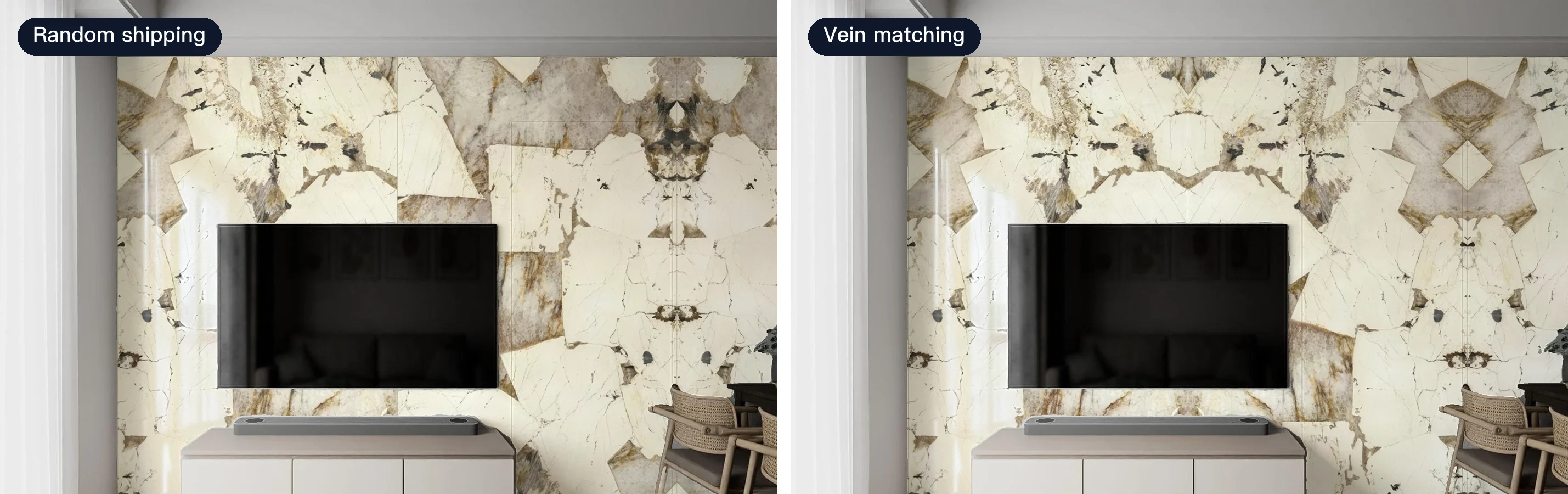
| Vein matching | Random shipping | |
|---|---|---|
| Looks like | One continuous piece of stone | Natural, relaxed |
| Works best on | TV walls, feature walls, long runs | Floors, large areas, casual spaces |
| Ask the supplier | How many slabs per set, how they're numbered | Same batch, consistent shade |
Vein matching also changes character completely with the color. All three walls below are laid in sequence: the white one is a mirrored design, while the brown and the black-and-gold carry their veins straight across.
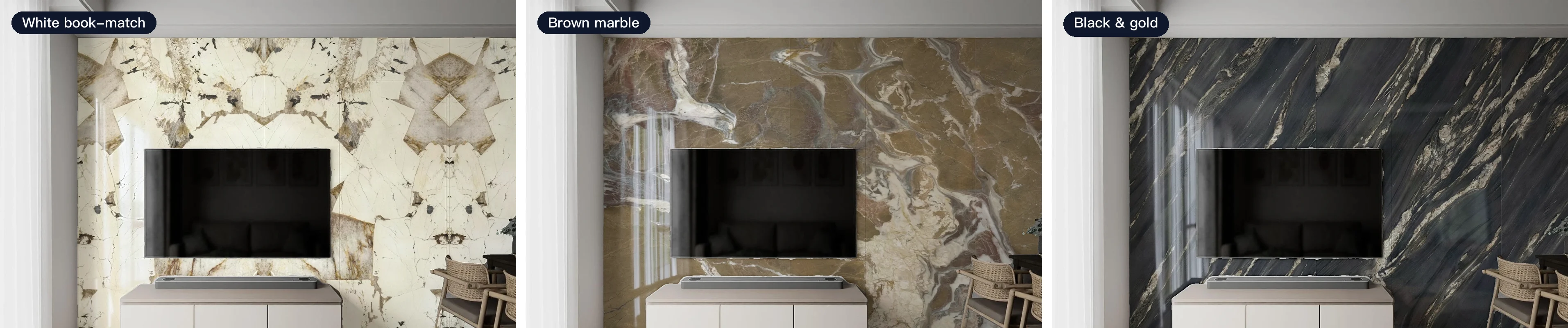
Vein matched vs book matched: in natural stone, book matching means cutting a block and flipping alternate slabs so they mirror each other like the pages of an open book, which takes fabrication. With porcelain slabs sold as a book-match design, the factory has already printed the mirrored faces, so laying them in numbered order does the job. Any other special layout is something to work out with your supplier.
Why is a slab feature wall so unforgiving?
Every decision on a large format wall is expensive and hard to undo.
- High cost per piece: the slab itself isn't cheap, and transport, cutting and installation add up.
- No second chance: lay the wrong order or cut in the wrong place, and you're ordering new slabs.
- Every slab is visible: a misplaced small tile disappears in the crowd; a broken vein across a slab is the first thing you see.
A tile rep in Taiwan described a situation they see often: the customer falls in love with a photo of a full slab in the showroom, then on site the wall turns out to need two and a half slabs, and the best stretch of veining ends up hidden behind the TV.
Put that exact slab on a photo of that exact wall before ordering, and the problem shows up while you're still talking, not after the cut.
Why isn't a sample enough?
A slab sample is usually a small piece cut from a full slab. It shows you the color, the gloss level and how it feels in your hand. It can't show you:
- which way the veining runs across the full slab, and where the bold veins land;
- how the veins connect once three slabs sit side by side;
- whether the TV, shelves or furniture will hide the best part of the pattern.
That's why many slab manufacturers dry-lay a full set at the factory before shipping. For homeowners and designers, the closest thing to that dry lay is previewing the whole wall on a photo of the room.
Which slab size, and where will the joints fall?
Choosing a slab size is really choosing where the joints go. On the same TV wall:
- 60×120 cm tiles create a grid of joints that chops the veining into small pieces;
- 120×280 cm slabs might need only three pieces and two joints, so the pattern stays intact;
- if the wall width isn't an exact multiple of the slab width, one slab gets cut, and whether it goes in the middle or at the edge changes the balance of the wall.
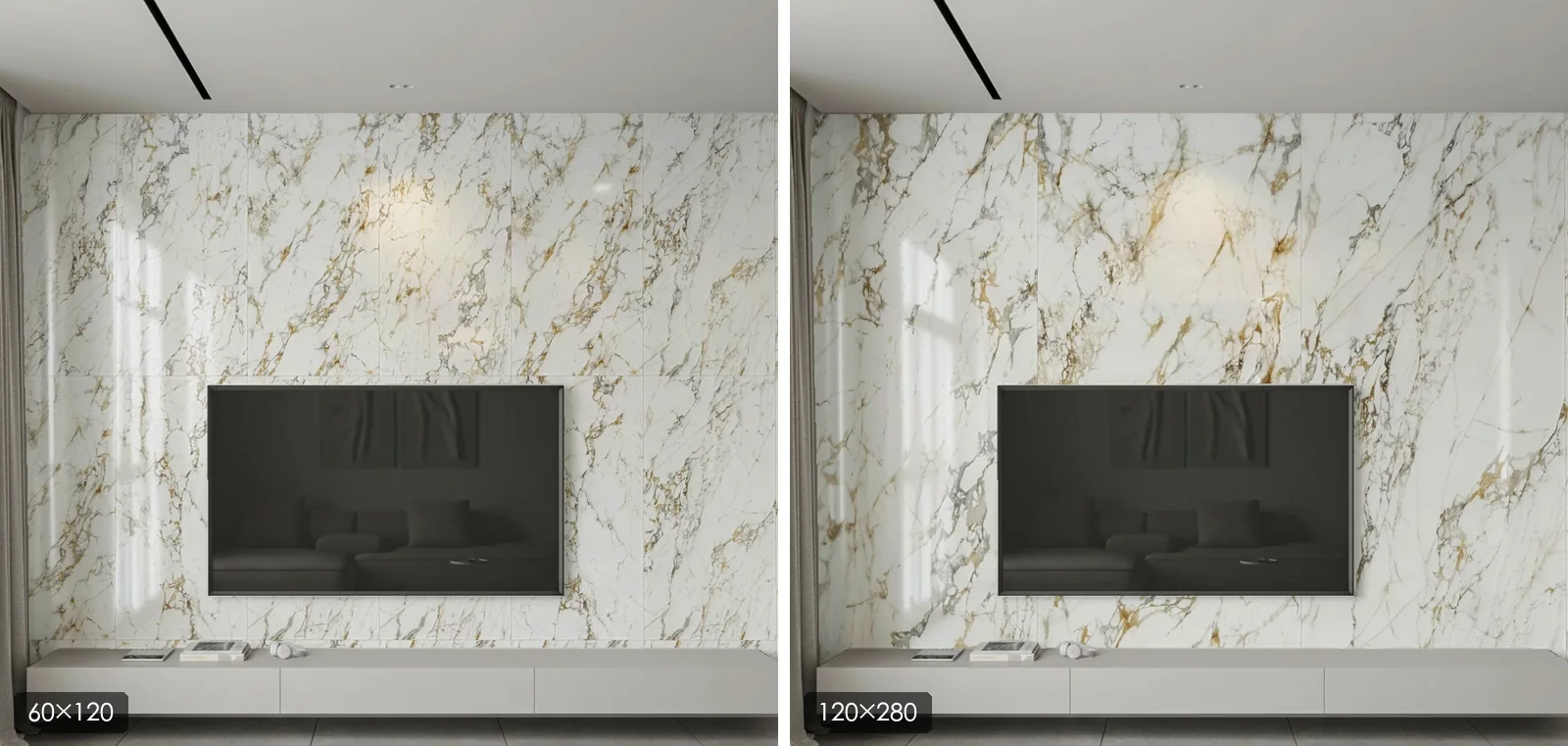
On the websites and sales links of tile brands that use RoomDreaming, you upload a photo of the wall, pick a slab, and the tile visualizer lays it at its real size. Vein-matched products go up in sequence with continuous veining, and if the brand offers both layouts you can switch between them on the same photo. No app download, no sign-up.
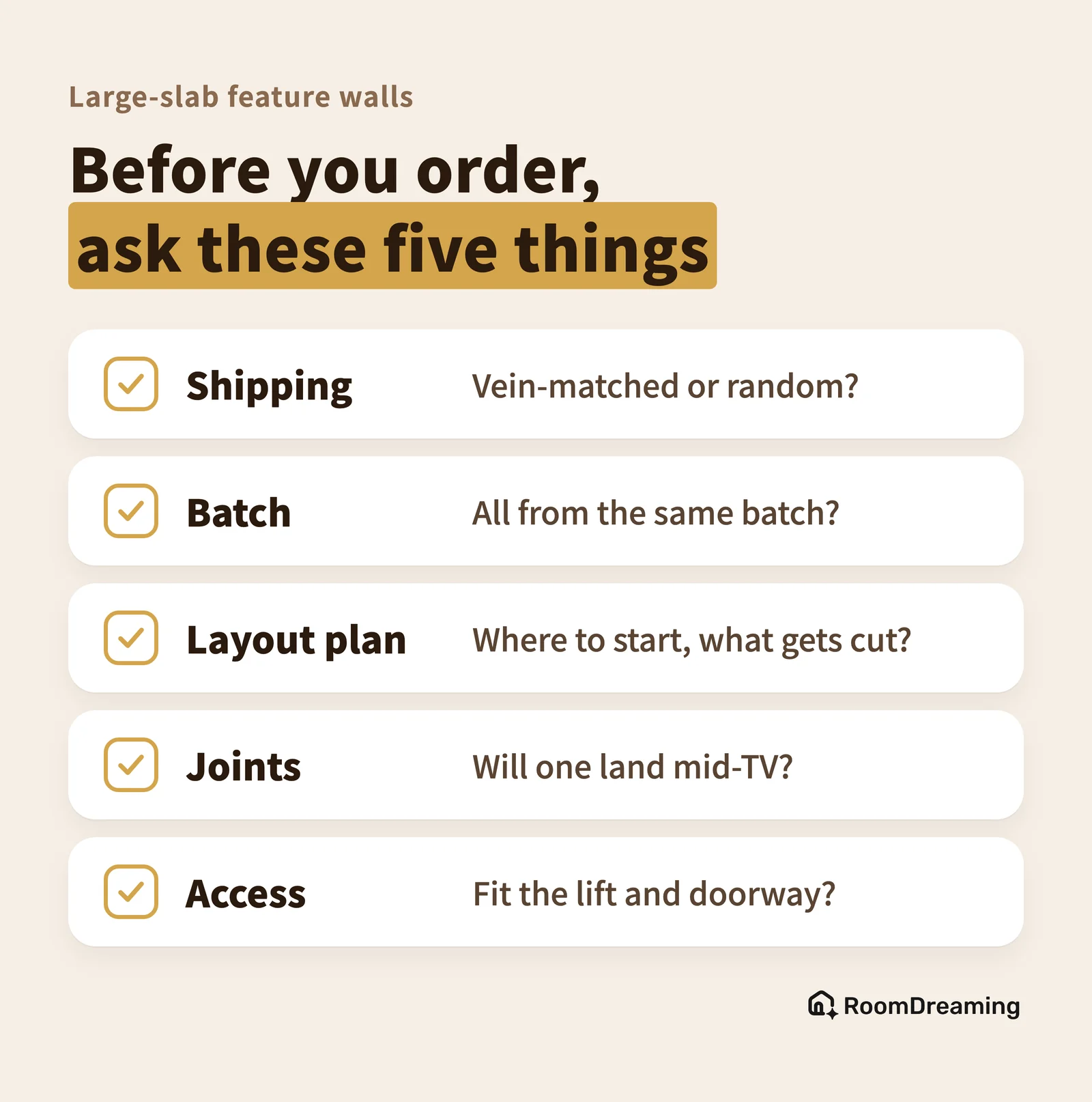
Before you order, confirm these with your supplier:
- Layout: is this design vein-matched or random? If vein-matched, how many slabs per set and how are they numbered?
- Batch: will all slabs for the wall come from the same batch?
- Layout drawing: ask for one based on site measurements, showing where the layout starts and which slab gets cut.
- Joint positions: will a joint land in the middle of the TV, an outlet or a switch?
- Access: will the slabs fit through the elevator, stairwell and door?
Here's the same list as a card you can pull up when you talk to the supplier:
For the other things a tile visualizer should get right, like grout color and offset patterns, see What is a tile visualizer?.
FAQ
What does vein-matched mean for large format tile?
The slabs of one design are laid in numbered order, so the veining carries on from one slab to the next and the wall reads like one continuous piece of stone.
Does a slab feature wall have to be vein-matched?
No. Bold veining on a wide wall looks most dramatic vein-matched; subtle veining or a relaxed look works well with random shipping. Preview both on a photo of your own wall before deciding.
Can a visualizer replace the installer's layout drawing?
No. A visualizer shows you how the whole wall will feel before you order; the actual installation should follow the layout drawing your supplier makes from site measurements.
See the whole wall before you order
To see a large format slab laid at real size, slab by slab, on a photo of your own wall, take a look at the RoomDreaming tile visualizer. Countertops and kitchen islands work the same way with the countertop visualizer.
Try it on a photo of your own room
Upload a photo and swap in real products to see them in your space. No download, no sign-up.