
How to Choose Grout Color: White vs Gray vs Black Grout
By Curtis (RoomDreaming Editor)
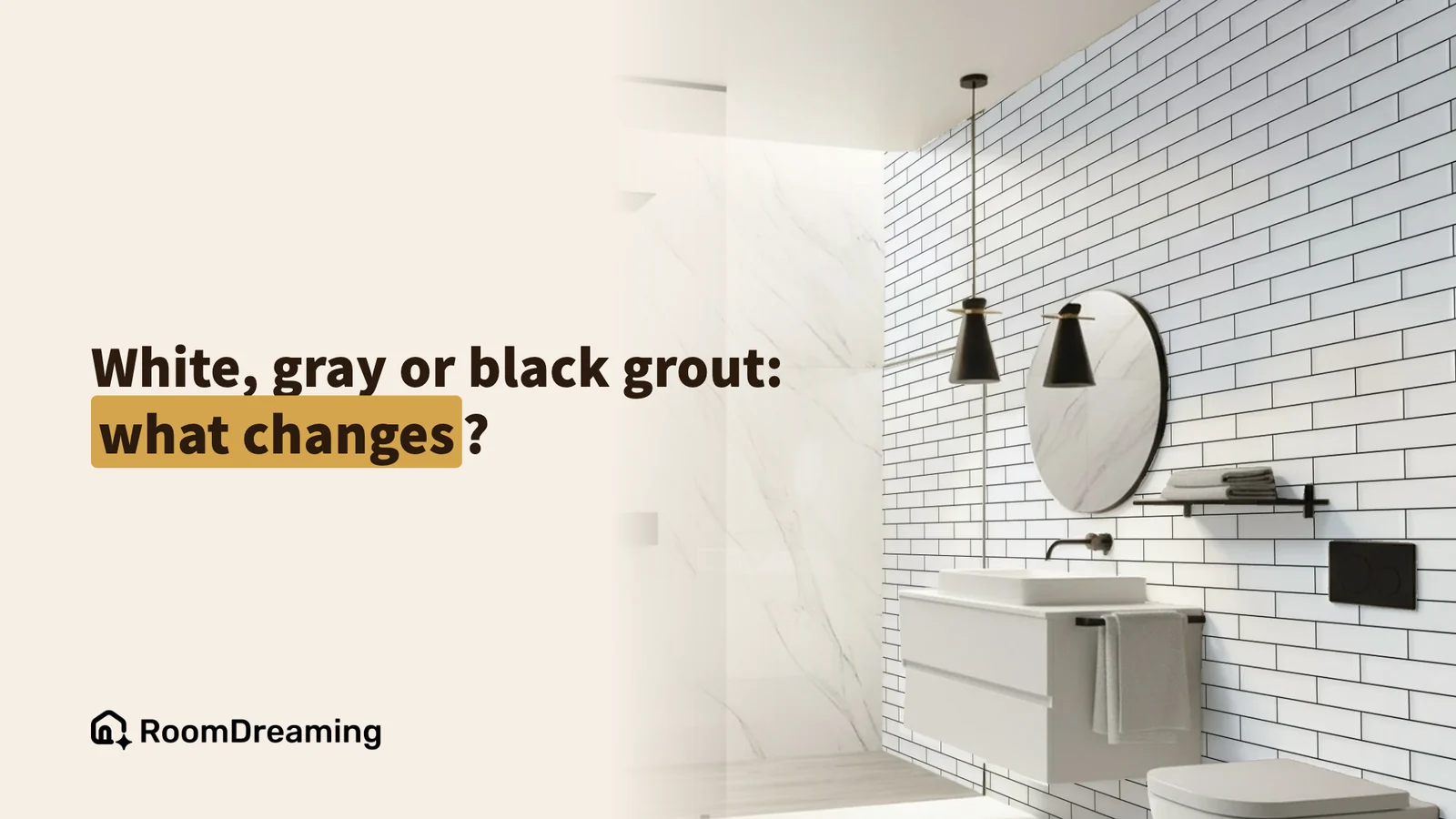
Choosing a grout color starts with one question: do you want the grout lines to disappear or to show? Grout that matches the tile makes the wall read as one surface; contrasting grout outlines every tile and the layout pattern. White grout is the cleanest but stains, gray hides dirt best, and black is the boldest.
Most people think the hard part is over once the tile is chosen. Then the installer asks, "What color grout?" and it turns out to be a real decision.
Grout is the most visible line on a tiled wall. Change its color and the same tile can look like a different product.
White vs gray vs black grout: what's the difference?
Here is the same bathroom wall with the same white 7.5×30 cm (about 3×12 in) tile, changing only the grout:
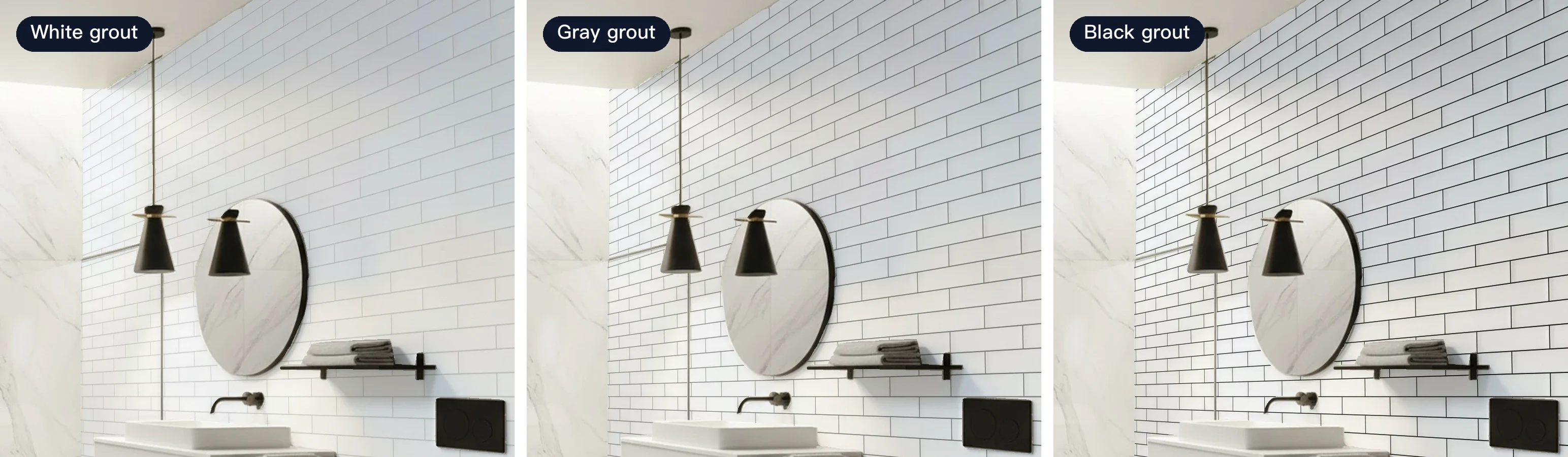
- White grout: the lines almost vanish and the wall reads as one bright, clean surface.
- Gray grout: the grid is visible but quiet. It hides dirt best, which is why it's the safe default for so many people.
- Black grout: every tile gets an outline, for a vintage or industrial, graphic look.
One more thing: grout often dries to a slightly different shade than it looks freshly mixed, so ask your installer or supplier to show you a cured sample before you decide.
| Grout | Looks | Works best for |
|---|---|---|
| White | Clean, one continuous surface | White tile, a fresh look, walls away from grease and water |
| Gray | Soft grid, easy to live with | Bathrooms, kitchens, floors |
| Black | Every tile clearly outlined | Feature walls, vintage or industrial styles |
Matching grout or contrasting grout?
This is the real choice behind every grout color:
- Matching grout: close to the tile color, so the lines fade and the surface looks continuous and the room larger. Marble-look and large format tiles usually go this way, letting the pattern speak.
- Contrasting grout: white tile with dark grout, or dark tile with light grout. The lines become a net that draws the layout clearly.
That's why contrasting grout magnifies the layout pattern. Same white tile, same black grout, and a straight lay versus a 1/2 offset look like two different walls:
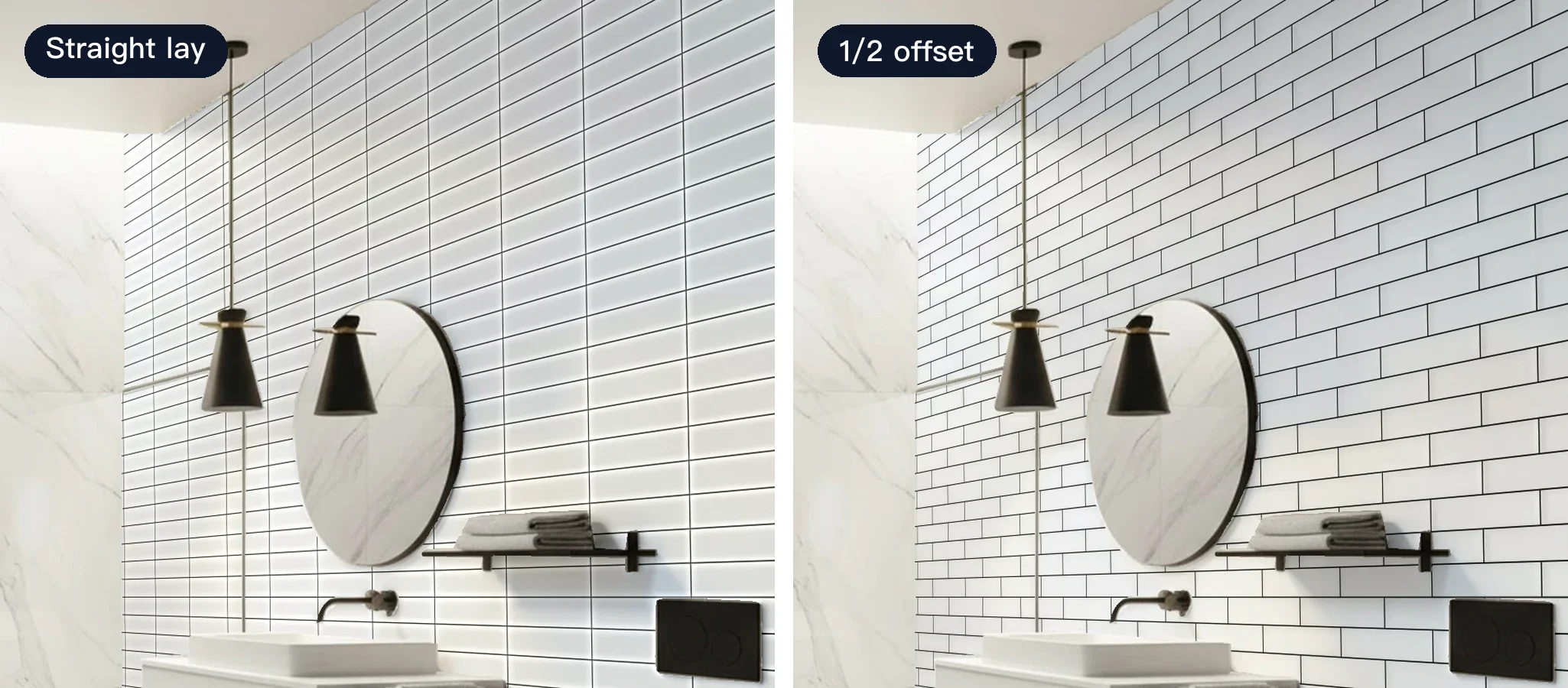
With matching grout, the pattern is much less obvious, so you can relax a little about the layout.
The tile's finish matters too. Glossy tile reflects light and looks smooth and crisp, which makes the grout color stand out more. Matte, stone-look or concrete-look tiles already have grain and tonal variation, so gray or matching grout blends in more easily.
Why does white grout get dirty, and what should you use in a bathroom?
White grout looks great, but it is usually the first thing on the wall to look old. Water spots, soap scum and mildew in the bathroom, grease in the kitchen: they all show up on the grout first. The tile wipes clean; the grout turns yellow; the whole wall looks tired.
It's the most common bathroom dilemma: the homeowner wants the crisp look of white tile with white grout, the installer says "white grout gets dirty fast," and the doubt sets in.
A few common compromises:
- Go light gray: from a distance it still looks fresh, and it's far more forgiving than white.
- White only in dry zones: use white behind the vanity or on walls that rarely get wet, and gray in the shower and on the floor.
- Change the grout type: ask your installer about a resin-based (epoxy) grout, which absorbs less and resists staining, so white lasts longer.
Floor grout gets dirty fastest, so many people choose a shade darker than the wall grout.
How wide should grout lines be?
Tile always needs a grout joint. Tiles expand and contract with heat and humidity, and with no joint at all they can eventually lift or crack, which is a real concern in a hot, humid climate like Taiwan's.
Common guidelines from tile suppliers in Taiwan:
- Tiles with ground, precisely cut edges: joints can be narrow, about 2–3 mm (roughly 1/16 to 1/8 in).
- Tiles with less regular edges: about 4–5 mm (roughly 3/16 in), giving the installer room to line every piece up.
The wider the joint, the more the grout color shows; the narrower, the less it matters. Follow the manufacturer's guidance and your installer's judgment for the final width.
FAQ
How do I choose a grout color?
Decide whether you want the grout lines to disappear or to show. For a clean, continuous surface, pick grout close to the tile color; to highlight each tile and the layout, pick a contrasting grout. If you can't decide, try both on a photo of your own room.
What's the downside of white grout?
It shows dirt. In bathrooms and kitchens, white grout slowly picks up water spots, grease and mildew, and ends up looking older than the tile. If you want white but worry about stains, ask your installer about a less absorbent resin-based grout.
How wide should grout lines be?
A common guideline is about 2–3 mm for tiles with ground, precisely cut edges, and about 4–5 mm for tiles with less regular edges. Tile always needs a joint; follow the manufacturer's guidance and your installer's judgment.
Try grout colors on a photo of your own room
White or gray is faster to settle with a picture than with your imagination. With the RoomDreaming tile visualizer you can put a tile into a photo of your room and switch grout colors and layouts. For the bigger picture, see how to choose bathroom tile.
Try it on a photo of your own room
Upload a photo and swap in real products to see them in your space. No download, no sign-up.