
Taiwan Material Selection Trends 2026: What 70,000+ AI Visualizations Tell Building-Material Brands
By Curtis (RoomDreaming Editor)
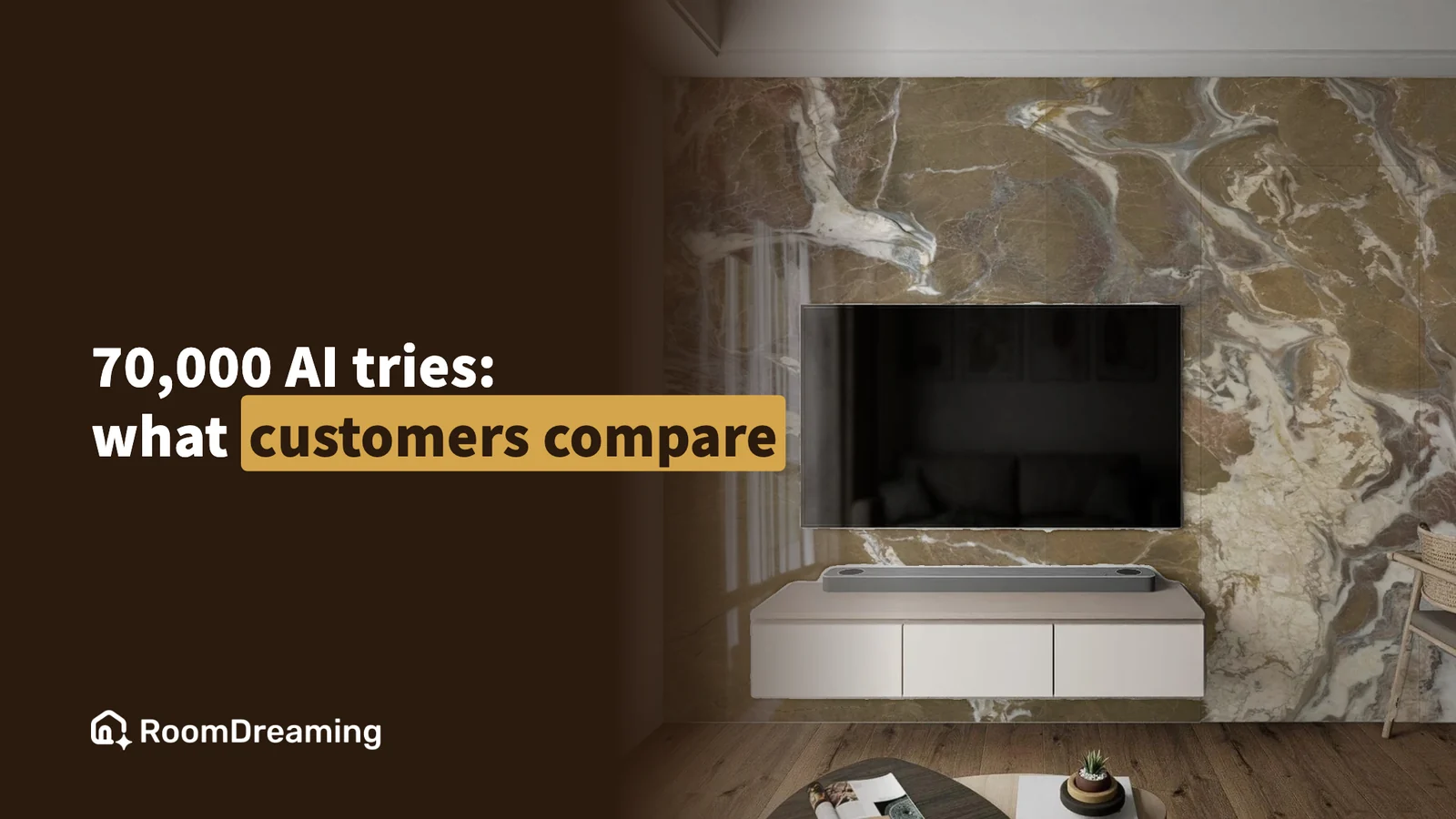
From January to October 2026, customers in Taiwan ran 73,515 AI material visualizations on RoomDreaming. Most people compared products in photos of their own homes, the feature wall was changed most, half of all tiles tried were large-format slabs of 120 cm or more, and matte finishes beat gloss.
We turned these records into anonymous statistics — no demo or test accounts, and no personal or brand data — for building-material brands and designers who want to know what customers actually try before they buy.
How many people use AI to choose materials?
Usage kept climbing: about 2,000 visualizations in February, more than 14,000 in August — roughly 7× in six months.
What matters more is how people use it: about 65% of visualizations used a photo the customer uploaded of their own room, not a built-in sample room. Most people aren't browsing; they're comparing products in their own home.
Which surface do customers change most?
Customers try paint, tile, cabinet doors and wood flooring in photos of their own homes. Whatever the material, the surface changed most is the wall — especially the feature wall you see as you walk in: the TV wall, the wall behind the sofa, the bathroom feature wall.
Art paint is visualized especially often. A small swatch makes it very hard to imagine a whole painted wall, so customers most need to see the result first.
Tile: half are large slabs, and matte beats gloss
- Half are large-format slabs: slabs of 120 cm or more (120×260, 120×278, 150×300 and so on) make up about 52%, followed by 60×120 cm at about 20%. Slabs are expensive and can't be undone, so customers want to see the whole wall first.
- Mostly on walls: about 67% of tile visualizations are walls and about 16% floors. TV walls and bathroom feature walls are the most common scenes.
- Light and matte: white, gray and beige together account for about 69%; matte is about 60%, the gloss family (polished, semi-polished, kiln gloss) about 37%.
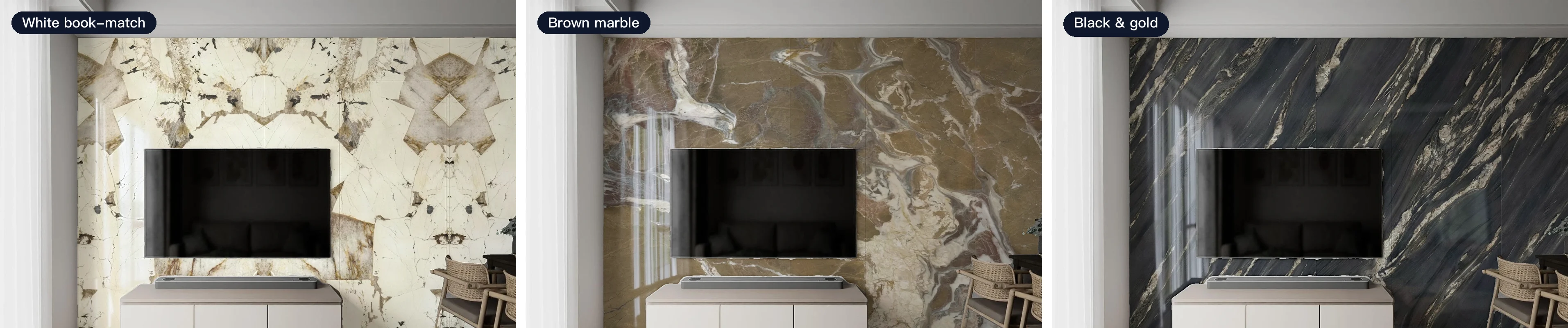
For how to preview a slab's full vein pattern before ordering, see How to preview large-slab vein matching.
Paint: customers compare techniques and finishes
Art-paint customers aren't only choosing a color. Among records with a labeled application technique, troweled and brushed techniques were tried most; among finishes, pearl, metallic and smooth plaster came up most often.
Take TACTO from LUXUS PAINT: every color comes in four application techniques — skim, press, swirl and brush. Here is the same gray on the same study wall, changing only the technique: skim leaves layered trowel marks, press is flatter with a fine sandy feel, swirl forms circular clouds, and brush leaves soft brush strokes.
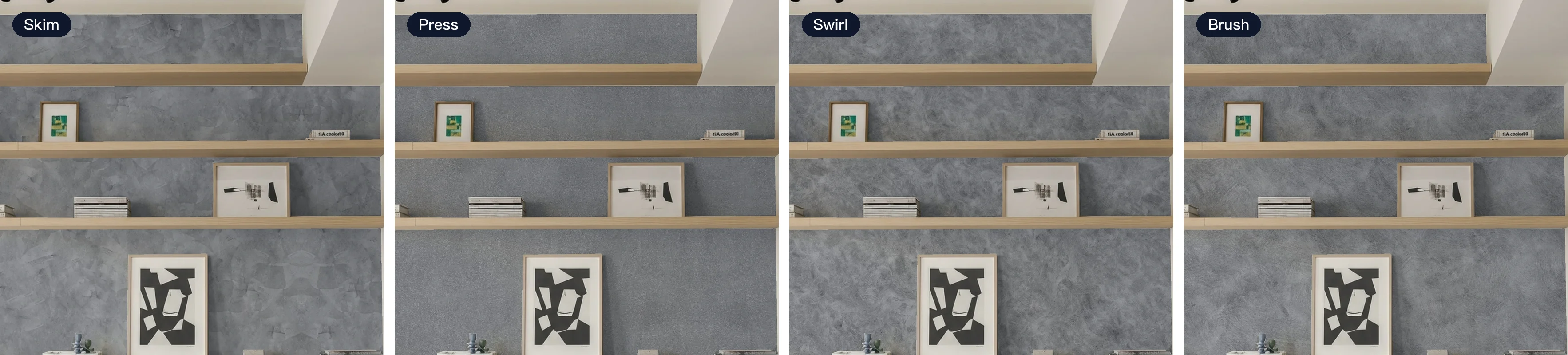
In other words, customers compare the same color applied in different ways — exactly what a small swatch can't show. For how paint brands can let customers try this online, see How art-paint brands let customers try colors online.
What this means for building-material brands
- The feature wall comes first: prepare size, pattern and finish data for the products most often used on walls.
- Large slabs and art paint need visualization most: the more expensive and harder to imagine a product is, the more customers want to see it first.
- Customers use their own photos: the tool has to accept a phone photo directly and work well on mobile.
RoomDreaming already hosts 8,000+ building materials across art paint, wood flooring, tile and more. To see what your products look like in a customer's photo, read What is an AI material selection system?
FAQ
Where does this data come from?
From AI material visualizations run by customers of building-material brands on RoomDreaming between January and October 2026 — 73,515 in total, excluding demo and test accounts. The figures are anonymous aggregates with no personal or brand data.
Which surface do customers change most?
Walls — especially the feature wall you see as you walk in, such as a TV wall, the wall behind the sofa or a bathroom feature wall. People try paint, tile, cabinets and wood flooring, but walls are the surface changed most often.
Which tile size is tried most often?
Large-format slabs of 120 cm or more account for about half, followed by 60×120 cm. A single slab is expensive and can't be re-laid once it's wrong, so customers most want to see the full wall first.
Put your products in your customers' photos
To let customers try your products in photos of their own homes, explore RoomDreaming's visualizer or book a demo.
Try it on a photo of your own room
Upload a photo and swap in real products to see them in your space. No download, no sign-up.