
How to Choose a Wood Floor Color: Light, Dark or Herringbone — Try It on a Photo of Your Room First
By Curtis (RoomDreaming Editor)

Three things decide the right wood floor color: the light in your home, the size of the room, and how the planks are laid. A shade that looks right in the showroom often reads darker across a whole room, so compare a few candidates on a photo of your own room before you look at samples.
The floor is one of the largest surfaces in a home, and once it's down, few people ever replace it.
Many buyers spend an afternoon in a showroom, take two or three samples home, line them up on the floor for days — and still can't decide. A single plank just doesn't tell you what a whole living room will look like.
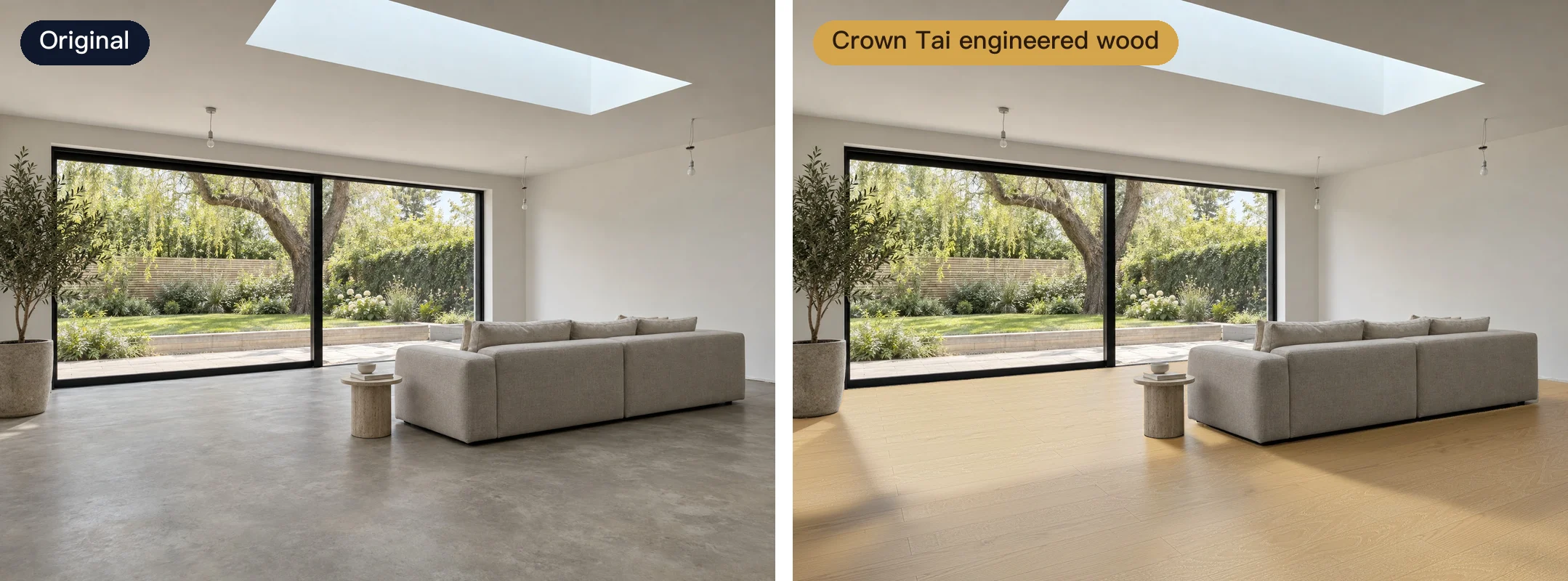
Why does a sample look right but the finished floor look darker?
Almost everyone runs into this, and the reasons are simple:
- More area, heavier color: a mid-tone that looks perfect in your hand can look dark across a whole room. That's why many flooring suppliers suggest going one shade lighter than your ideal.
- Showroom lighting isn't your lighting: showrooms are bright and evenly lit; your home may have one window and warm bulbs at night.
- Real wood varies: solid wood changes color over time and batches differ, so the final check should be on the actual stock.
How does your light change the floor color?
Light matters most, and day and night should be judged separately.
- Daytime, check the window direction: north light is cool and makes a floor look flatter and grayer; south and west light is warm and brings out yellows and reds.
- Nighttime, check the bulbs: warm light makes wood look more yellow — light floors often look yellower than expected. Cool white light looks cleaner.
This is where a photo of your own room helps: the photo already carries that room's light — bright by the window, darker in the corners — and the new floor follows it. You can also adjust the ambient light to get a rough idea of warmer or cooler conditions.
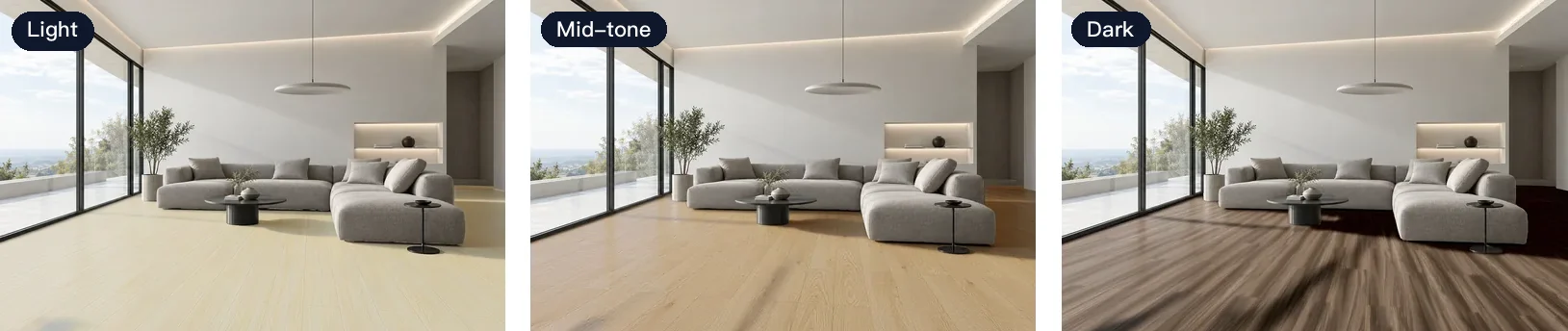
Light, mid-tone or dark: which suits which room?
No color is better in general — only better for your room:
| Tone | Works well for | Watch out for |
|---|---|---|
| Light | Small rooms, an open and bright feel | Turns yellow under warm light; can look flat next to white walls and cabinets |
| Mid-tone | Most homes; easy to live with | Can blend into wood cabinetry of a similar color |
| Dark | Larger, well-lit rooms; a calm, grounded look | Gets darker in low light; shows dust and scratches more |
If you're stuck between lighter and darker, the fastest fix is to put two or three colors side by side in the same photo. Here is one living room with three wood floors from Crown Tai, a Taiwanese flooring brand:
A floor is never seen on its own — it always sits with the walls and cabinets. A few simple rules:
- Keep warm with warm: warm floors with warm whites, gray floors with white or gray walls.
- Separate floor and cabinets: if they're too close in color they merge; one light, one dark is a common fix.
- Decide the big surfaces first: floor, walls and large cabinetry, then furniture.
What if your wood floor is too dark?
If the floor is already down and the whole home feels dim, don't rush to replace it. The floor is hard to change, but everything around it isn't:
- Lighten the walls: warm white or off-white walls lift the whole room, and repainting a wall is far easier than relaying a floor.
- Add a light rug: a large, light rug in front of the sofa or beside the bed covers part of the dark area and makes the room feel lighter right away.
- Add more light: dark floors absorb light and make corners look darker. Indirect lighting or a floor lamp keeps evenings from feeling heavy.
- Choose lighter furniture and cabinets: contrast with the floor so the room isn't one dark mass.
The same floor with a white wall versus a gray wall (Marmo Antico from San Marco) — how dark the floor reads, and how much it dominates, changes:
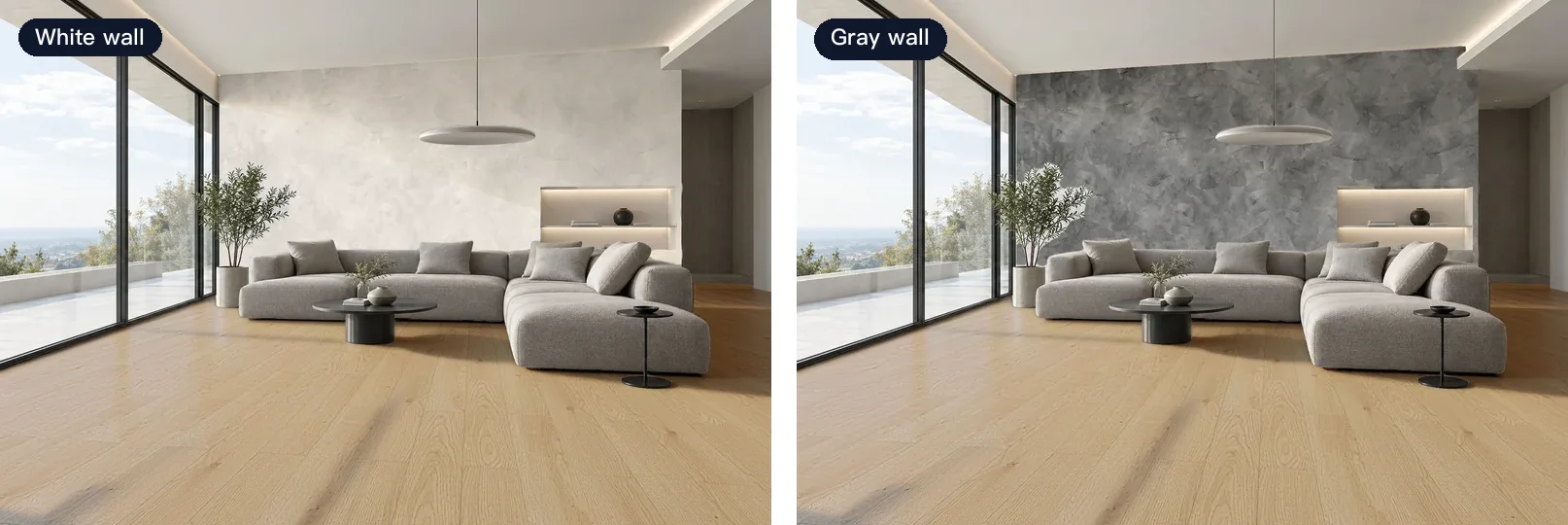
If you haven't laid it yet, the easy fix is to visualize before you choose: put your favorite color and the shade one step lighter into the same photo, and there won't be any surprises on installation day.
Do herringbone, chevron and straight lay really look that different?
Yes. The pattern changes the direction of the grain, and with it how light falls on the floor.
- Straight lay: the grain runs one way — clean, orderly and the most common.
- Herringbone: rectangular planks meet at right angles in a V. Because the planks alternate direction, the same color shows a light-and-dark play.
- Chevron: plank ends are cut at an angle and meet in a sharper V for a more formal look.
Herringbone and chevron take more labor and material than a straight lay. People often mix up the two terms, so point at a picture when you talk to your supplier.

Flooring brands that use RoomDreaming, like Crown Tai, offer a visualizer on their website or their own visualizer page, or as a link from their stores and reps: take a photo of the room, pick a floor from the brand's catalog, switch between staggered, herringbone and chevron, and compare two or three side by side before you look at samples. Each plank is laid at its real size with its own grain, so the floor doesn't repeat in an obvious pattern.
Wondering whether wood floors are a greener choice? See how to show a wood floor's carbon footprint in terms customers understand.
FAQ
What wood floor color works best in a small room?
Light and mid-tone floors make a space feel more open, especially in rooms with little daylight. Dark floors aren't off-limits, but in a small, dim room they can feel heavy — compare them on a photo of your room first.
What's the difference between herringbone and chevron?
Herringbone uses rectangular planks that meet at right angles to form a V. Chevron cuts the plank ends at an angle so they meet in a sharper, more formal V. The two terms are often mixed up, so confirm with your supplier using a picture.
How should I look at wood floor samples?
Lay the sample flat on the floor rather than holding it, and leave it in the room for a full day — check it in daylight and again with the lights on at night. Narrow down to one or two with a visualizer first, then do this carefully.
Compare floors on a photo of your room
To compare wood floor colors and patterns on your own photo, try the RoomDreaming flooring visualizer.
Try it on a photo of your own room
Upload a photo and swap in real products to see them in your space. No download, no sign-up.
Further reading
- What Is an AI Material Selection System? Why Building-Material Brands Need Their Own
- What Is GWP? How to Turn a Building Material's Carbon Footprint Into Something Customers Understand
- Interior Design Proposals Taking Too Long? How Designers Use Brands' AI Material Visualizers to Save Render and Selection Time